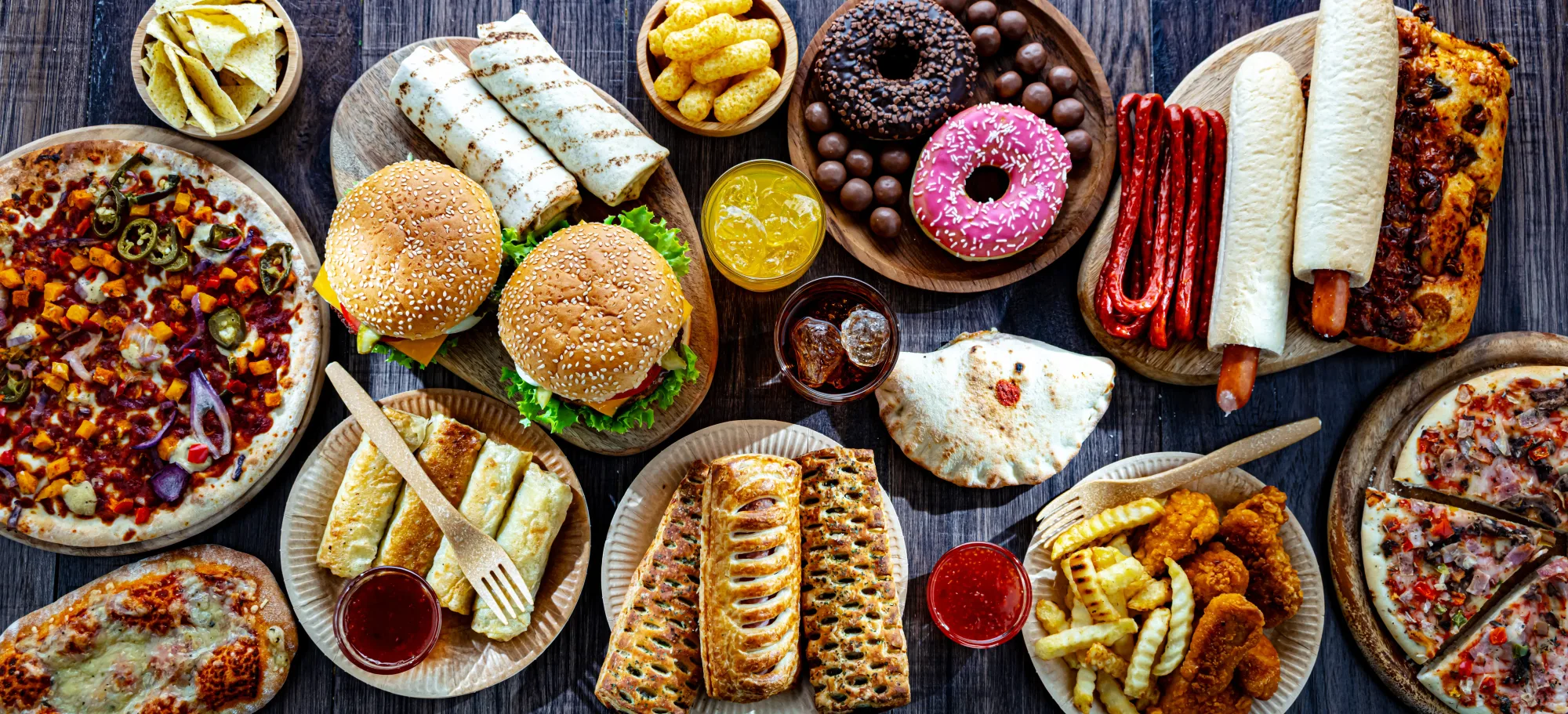
"Processed food" sounds scary. But it covers a huge range of things.
Almost everything in a shop has been processed somehow. Milk is heated to kill germs. Fruit gets frozen. Beans get canned. A lot of that is helpful. It keeps food safe and easy to get.
So the word "processed" isn't really the problem. The real question is about one group: ultra-processed food.
These are products built in factories. They start with cheap, refined ingredients and lots of additives. They are made to taste amazing, last for months, and be super easy to grab. Think chips, soda, instant noodles, sweet cereals, and packaged snacks.
Here is what scientists think this kind of food does inside you.
It makes you eat more without noticing
This is the clearest pattern. When most of your food is ultra-processed, you tend to eat more than you meant to.
Why? A few reasons.
Most of it is soft and easy to chew. You eat fast, and your "I'm full" signal shows up too late. It also tastes incredible on purpose — a perfect mix of sweet, salty, and fatty. That can override your normal hunger brakes. And it is usually low in fiber and protein, the two things that actually fill you up.
This does not mean every packaged food is a trap. It means a diet built on these foods makes overeating easy.
It can mess with your blood sugar
Ultra-processed food often packs in refined starch and added sugar, with little fiber.
Compare two foods. Beans wrap their carbs inside fiber, so your body breaks them down slowly. A pastry or a soda hands you the sugar fast, with nothing to slow it down.
Fast sugar means a quick spike. Your body then pumps out more insulin to clear it. Insulin is the hormone that moves sugar out of your blood. Over time, this pattern makes blood sugar harder to control.
It crowds out the good stuff
Here is a strange thing. You can feel stuffed and still be short on nutrients.
Ultra-processed food gives you plenty of calories but fewer vitamins and less fiber. When it fills your plate, there is less room for the foods your body actually needs.
It shows up with more disease
Big studies follow people for years. Again and again, those who eat the most ultra-processed food get sick more often. Heart disease, type 2 diabetes, and earlier death all show up more.
But here is the honest part. These studies can't prove the food caused it. People who eat this way might also sleep less, stress more, or have less money and time. Scientists can't fully separate all of that.
Still, the same signal keeps showing up across many studies and many countries. That is hard to ignore.
What about the additives?
Ultra-processed food is full of extra stuff — sweeteners, colors, and flavors. Some scientists wonder if these harm your gut or stir up swelling inside you.
Maybe they do. But the simpler reasons — too many calories, too little fiber, too much refined carb — already explain a lot of the risk. So additives might matter, but they are probably not the whole story.
A simple way to think about it
Don't panic over the word "processed." Frozen fruit and canned fish are fine.
Ask a better question instead. How much of what you eat comes from a factory, built to be eaten fast and never stop?
Here is the rule of thumb. The further a food gets from its natural shape, the easier it is to overeat — and the harder it is for your body to stay in balance.
Sources
- https://nutritionsource.hsph.harvard.edu/processed-foods/
- https://publichealth.jhu.edu/2025/what-are-ultra-processed-foods
- https://studypages.com/blog/how-much-is-too-much-ultra-processed-foods-and-your-body/
- https://www.sciencedirect.com/science/article/pii/S2161831323013820
- https://ysph.yale.edu/research/information-sheets/ultra-processed-foods/
