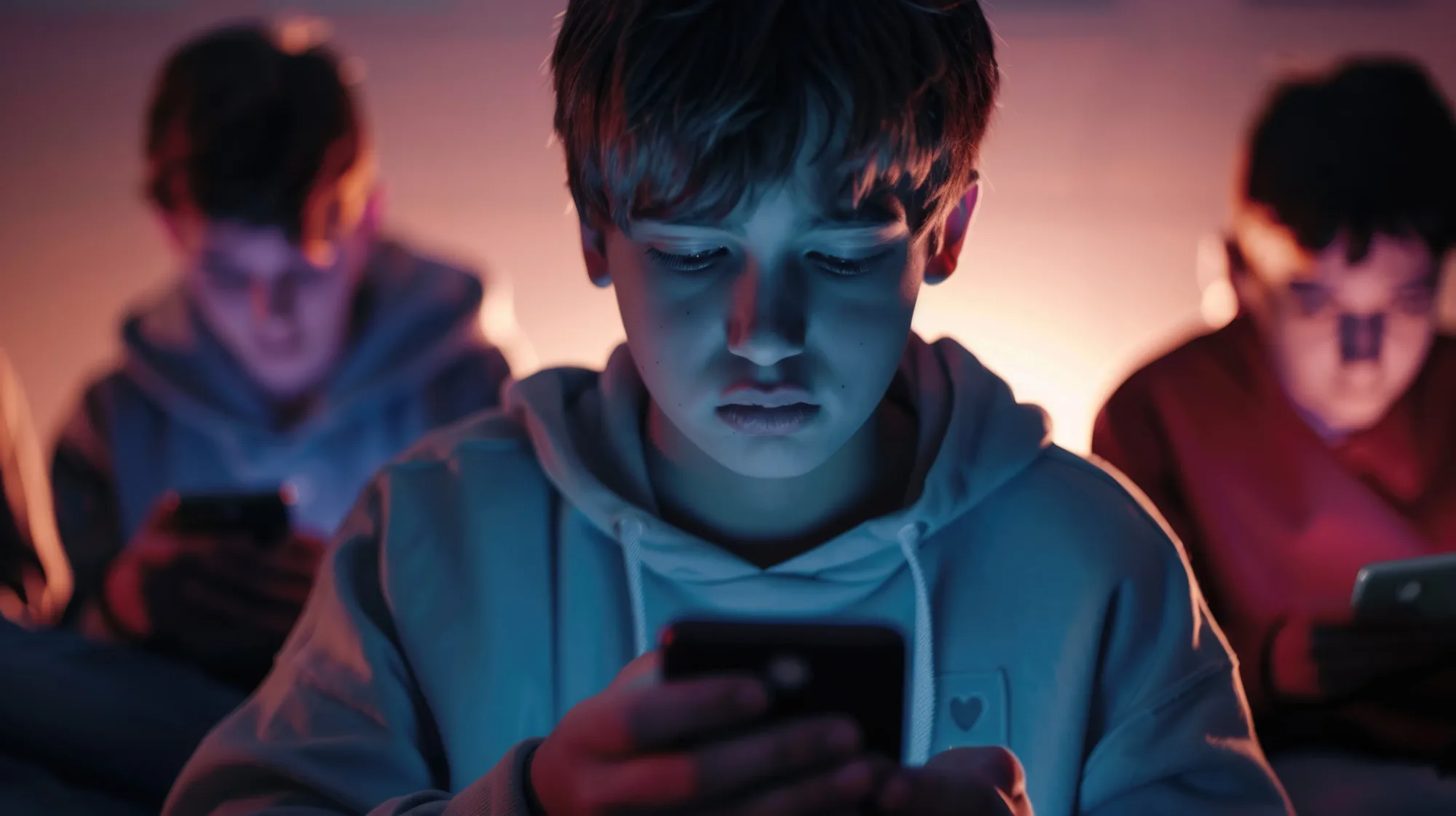
You know the feeling. You open your phone to check one thing. Twenty minutes later, you're still scrolling — and you never actually decided to stay.
Scientists are starting to ask what all that scrolling does to a brain that's still growing. In 2024, a study used MRI scans — detailed pictures of the brain at work — to look for an answer.
What the study found
Researchers compared two groups of teens. One group had what doctors call "internet addiction" — scrolling so out of control it was hurting their daily lives. The other group didn't.
The scans showed a real difference. In the addicted group, the brain systems that handle focus, planning, and self-control were working differently.
That matters because of when it's happening. Your teenage years are exactly when those systems are being built. Scientists call this "executive function" — think of it as your brain's manager. It holds your goals in mind, resists impulses, and helps you follow through.
And the manager is one of the last parts of your brain to finish growing. Usually not until your mid-20s.
This isn't just one study, either. Researchers who followed babies with heavy early screen time found similar patterns years later — slower decision-making and more anxiety in their teens.
What the study can't prove
Here's the honest part.
The study can't prove the scrolling caused those brain differences. It could be the other way around: teens who already struggle with focus might be more likely to get hooked on their phones in the first place.
A difference on a brain scan is a clue, not a verdict. It doesn't tell us exactly how someone's real life is affected. And "internet addiction" is a label scientists still argue about — where's the line between loving your phone and being addicted to it?
So no — this study doesn't prove that screens damage your brain. What it shows is that out-of-control scrolling and slower-growing self-control tend to show up together. That alone is worth taking seriously.
Your brain gets good at what it practices
Here's a simple way to think about it.
Your brain strengthens whatever it does most. Practice piano, you get better at piano. Practice worrying, you get better at worrying.
Apps are built to be unpredictable. You never know what the next swipe brings — a great video, a boring one, a message from someone you like. That unpredictability is exactly what keeps a brain hooked. It's the same trick slot machines use.
Focus works the opposite way. Reading a whole chapter. Finishing a hard problem. Sitting with boredom. These are slow rewards — and they're exactly the workouts that build your brain's manager.
So the real question isn't "are screens evil?" They're not. It's this: if most of your day goes to fast rewards, how many hours are left to practice the slow ones?
What to do with this
Not panic. Panic never helped anyone put their phone down.
Try curiosity instead. The useful question isn't "how many hours was I on my phone?" It's "what did that time replace — and how did I feel afterward?"
If the answer is "it replaced sleep, and I felt worse" — that's not a scientist's finding. That's yours. And it's the kind you can actually do something about.
Sources
- https://www.cnn.com/2024/06/04/health/internet-addiction-teen-brain-activity-wellness
- https://neurosciencenews.com/anxiety-neurodevelopment-screen-time-30079/
- https://www.facebook.com/neurosciencenews/posts/early-screen-time-linked-to-long-term-brain-changes-teen-anxietylong-term-data-f/1296203152537918/
- https://beingpatient.com/screen-time-john-hutton/
- https://www.labroots.com/trending/neuroscience/30041/infant-screen-time-linked-levels-teen-anxiety?srsltid=AfmBOoqkS6VypxKnmDuvDrOxDPIpyq91FcDicYQcUHc26p3oKBcAGzbd
